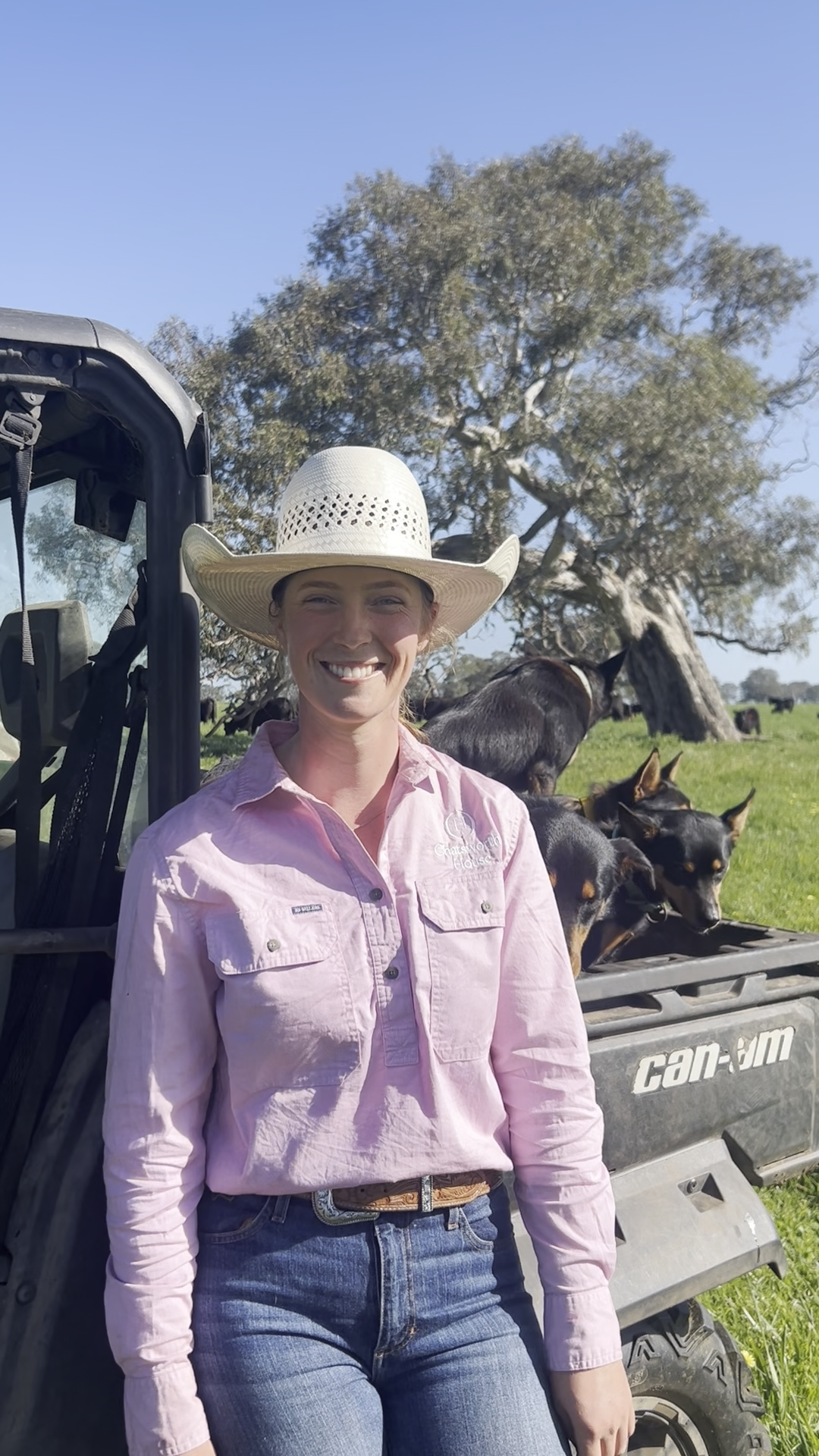
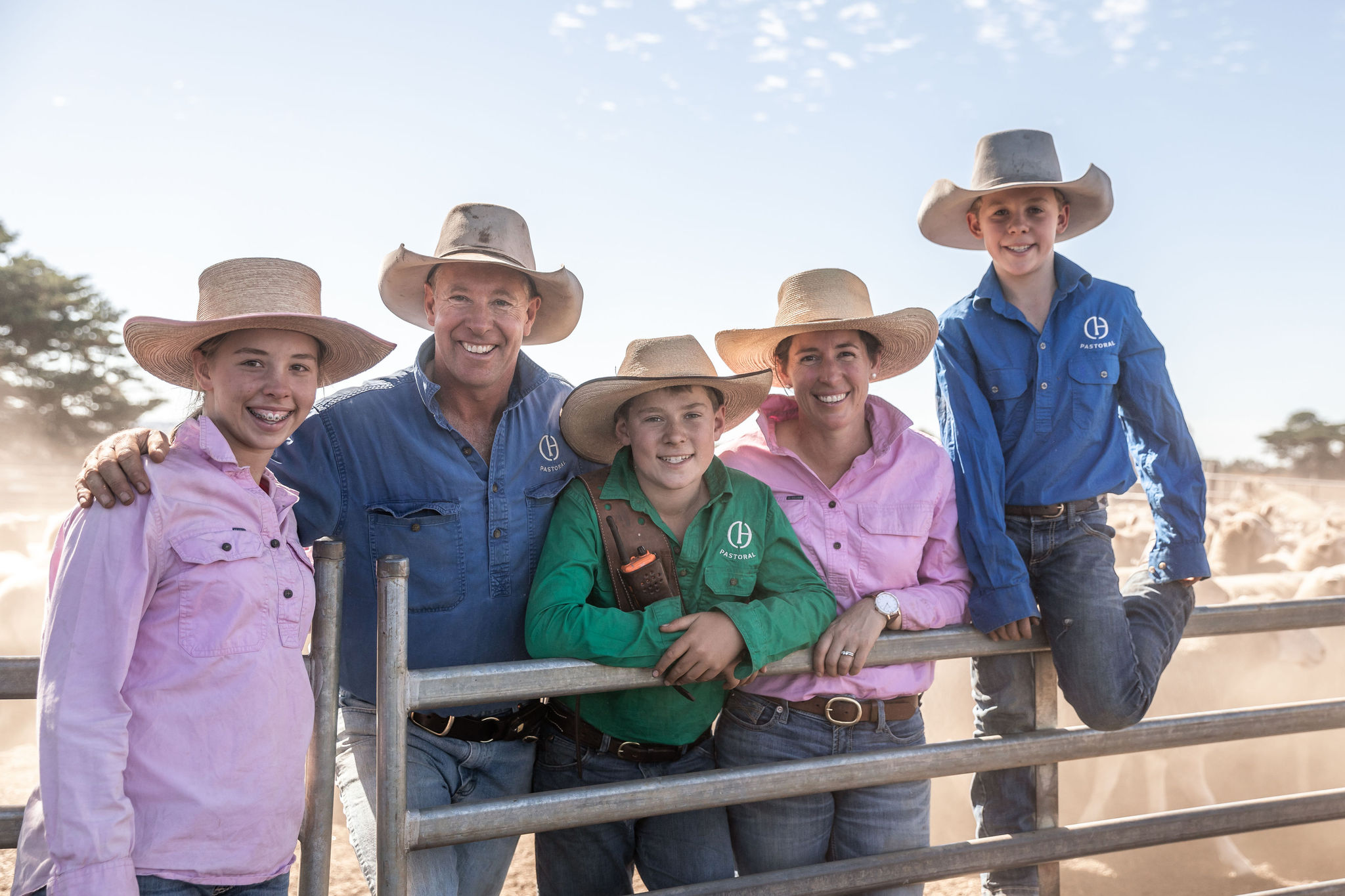

At Chatsworth House Pastoral in southwestern Victoria, Tom and Sarah Whinney are building a farming operation focused on improving soil health, optimising pasture performance and leaving the land in better condition for future generations. With AgriWebb supporting their grazing management and day-to-day operations, the team has greater visibility of pasture conditions, livestock movements and the decisions that shape their long-term goals.
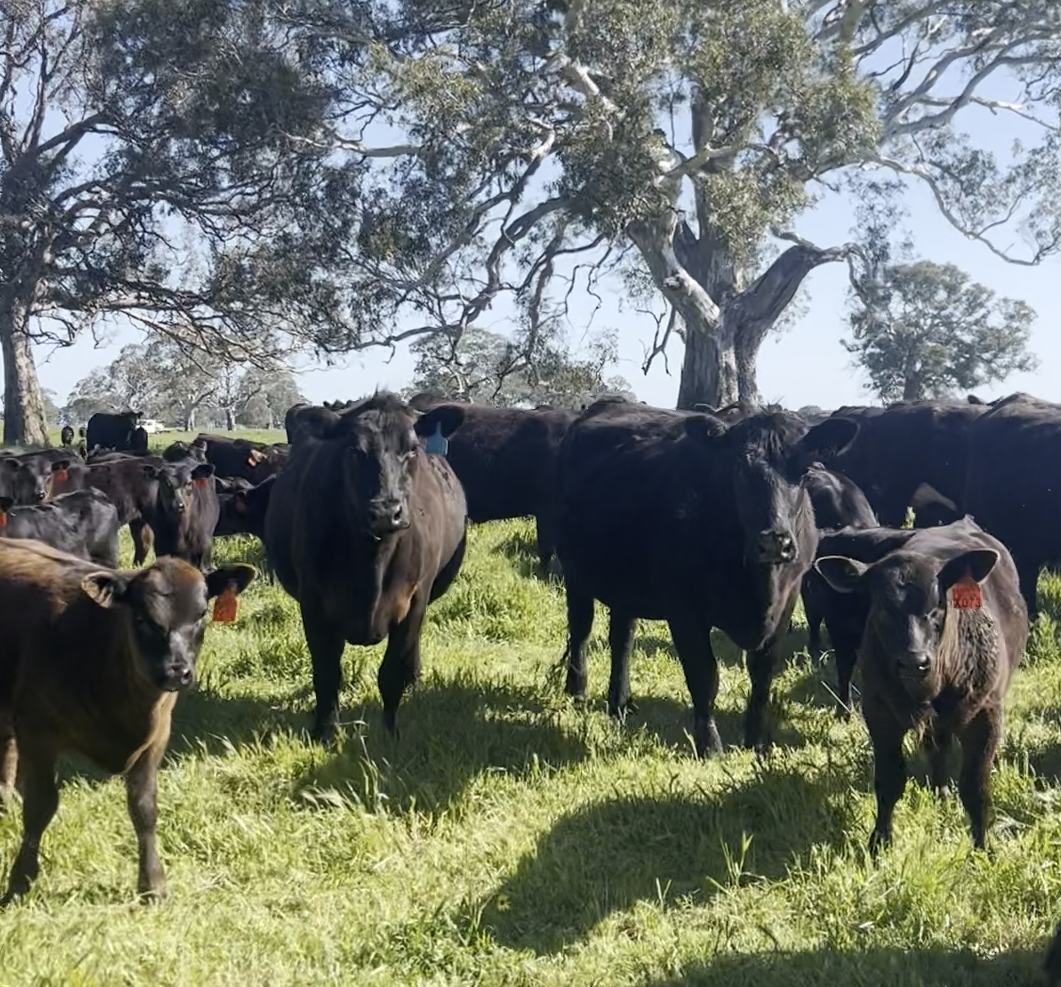
They run a mixed cattle and sheep operation managing approximately 500 breeding cows and 7,500 ewes. Since moving to the property in 2020, they’ve been on a journey to build its natural capital, learning more about what it takes to farm with the land rather than against it.
When reflecting on the property's history and future, Tom shared his hope that his contribution would be to improve the soils for generations to come - a legacy that underpins the way the team approaches farm management.
For Livestock Overseer Jacinta Young, that vision translates into a strong focus on grazing management, balancing pasture recovery with livestock performance and making informed decisions about how the land is used.
Planning grazing rotations around pasture recovery
Tom and Jacinta work together to plan grazing rotations across the property, with adequate pasture rest periods central to their approach. They typically set stock over winter and early spring with ewes lambing and cows calving, then as the mob sizes increase after marking the rest periods are increased to 20 - 30 days in the middle of spring, and then even longer to 60 days over summer. Depending on how the season goes, rest period might even go as far as 90 days over late summer and autumn.
{{quote1}}
One of the map insights the team regularly uses is ‘days since grazed’, which helps them understand how long each paddock has been resting. By considering these rest periods alongside seasonal conditions and pasture recovery, they can make more informed decisions about where and when livestock should move next.
The required rest period changes throughout the year, depending on pasture growth and recovery. Coming out of lambing, for example, the team can review which paddocks have had sufficient rest and are ready to support the nutritional needs of their livestock whilst balancing rest periods and mob size.
Having this information readily available helps connect the grazing plan with the practical decisions being made in the paddock.
Matching stocking rates to carrying capacity during lambing and calving
One of the team's key grazing decisions this year was allocating the right stocking rate to each paddock ahead of lambing and calving. The are currently running at 17.9DSE/ha but focus on rolling DDH/100mm rainfall which is based on 12DSE/ha and an average annual rainfall of 550mm. At the end of September, they were at 817 DDH/100mm which is close to the desired carrying capacity benchmark of 796 DDH/100mm.
One of the main profit drivers of a prime lamb enterprise is kilograms of lamb produced per hectare. This is a function of lamb survival and growth. The work that came out of Lifetime Ewe Management and T90 showed a correlation between lamb survival and mob size. Our aim was therefore to keep our twinning mobs as small as possible and top up DSE/ha with calving cows.
The team then assessed paddocks for their suitability, considering available feed, carrying capacity, shade and shelter from the wind. With young lambs particularly vulnerable in their early weeks, selecting appropriate lambing paddocks was a priority.
They then matched the livestock allocated to each paddock with its estimated carrying capacity, helping ensure the available feed could support the stock without placing unnecessary pressure on pasture recovery.
Where paddocks had abundant feed, cattle could be added to make better use of the available pasture. Where feed was more limited, livestock numbers could be adjusted accordingly.
This approach helps the team balance livestock requirements with the productive capacity of the farm, using the available information in the Stocking Rate to Carrying Capacity Report to support more confident stocking decisions.
The marking percentages came out as 10,342 lambs marked at 120% and 365 calves marked at 97%.
Keeping complex livestock rotations on track
With multiple mobs of sheep and cattle, many with offspring at foot, managing grazing rotations across the property requires careful coordination and communication amongst the team.
The team uses AgriWebb’s Rotational Planner to map out upcoming grazing movements and organise which paddocks each management group will move through. The planner schedules upcoming movements, which Jacinta and the team can then complete every few days.
For example, one mob of 126 heifers and their calves is currently moving through a designated set of paddocks as part of a separate grazing rotation. By creating plans for individual mobs, the team can break a complex grazing program into manageable, visible steps. Everyone can access the plans, understand what is coming up and stay aligned on the next move.
This shared view is particularly valuable when coordinating multiple livestock groups, helping the team keep rotations organised while adapting to changing feed availability and seasonal conditions.
Turning paddock observations into better decisions
While technology helps the team plan ahead, assessing conditions on the ground remains an important part of grazing management.
At a recent event, out in the paddock, David Mclean (RCS) and Jacinta assessed the available feed for the current mob and considered how much dry matter the livestock had consumed during their time there. Jacinta used the rising plate meter to calculate the current available Feed on Offer in kg/DM.
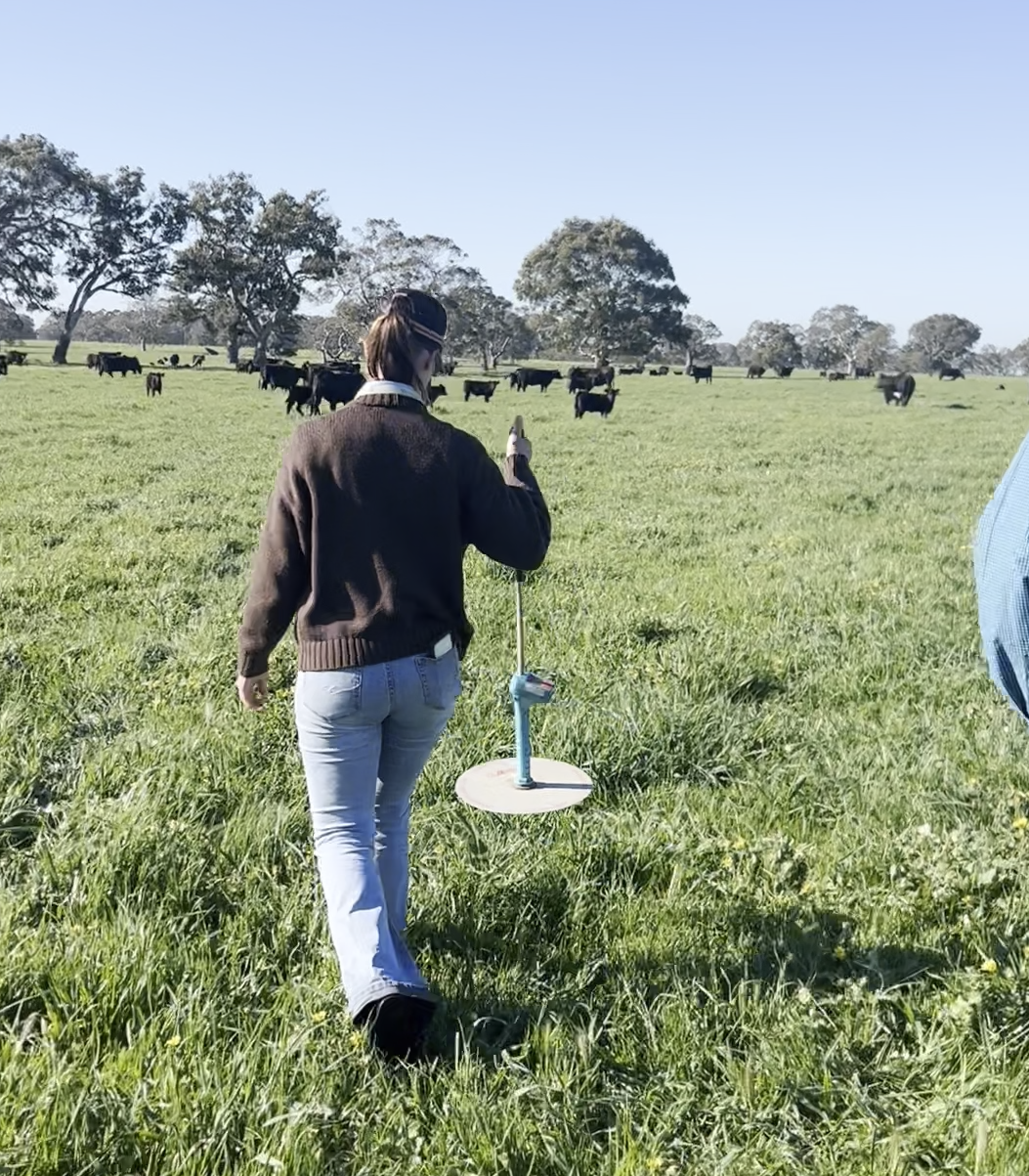
They used a simple calculation based on the mob’s DSE load (2,200 DSE), the number of days grazed (2.5 days) and the area of the paddock or grazing cells (8.75 Ha) to estimate dry matter consumption per hectare. This provided an additional indicator to help them understand how the mob had used the available feed during the grazing period.

They used a simple calculation based on the mob’s DSE load (2,200 DSE), the number of days grazed (2.5 days) and the area of the paddock or grazing cells (8.75 Ha) to estimate dry matter consumption per hectare. This provided an additional indicator to help them understand how the mob had used the available feed during the grazing period.
2200 x 2.5 = 5,500 total DSE load.
5,500/8.75 = 628.571 kg/DM/ha
They assessed that this particular mob had consumed roughly 628 kg/DM/ha in the 2.5 days they’d been grazing.
With AgriWebb readily accessible on their phones, they could also review days grazed, the length of the current rest period and previous grazing activity on the paddock. They aim for a target residual of 1500kgDM/ha, that is to move the mob on to the next pasture before they get below 1500kgDM/ha.
Combining these records with their observations in the paddock gives the team a clearer picture of how paddocks are being utilised and helps inform decisions about when to move livestock and how long to rest pasture before grazing again.
This underpins the team’s ability to implement the core principles from RCS - plan, monitor and manage, give adequate rest and match stocking rate to carrying capacity. These principles are tried and tested to give farmers the structure to guide decision making and really use AgriWebb’s grazing tools to the fullest.
Giving the whole team visibility
The visibility their team has supports their overarching mission on better grazing management and livestock performance management. Using AgriWebb for day-to-day task management, livestock record keeping and grazing planning helps everyone stay connected and work towards the same priorities.
“A big focus here is grazing management and improving soil health,” Jacinta explains. “We’ve been able to utilise the grazing planning tools within AgriWebb to optimise this as well as all the other moving parts of the business.. It’s very accessible for the team, and they can see what jobs are coming up each day.
{{quote2}}
Beyond the daily workflow, the team also uses AgriWebb’s reports to review grazing outcomes, understand what has worked and identify opportunities to improve pasture and livestock performance.
Connecting people, knowledge and the land
For the Whinneys, improving the property goes hand in hand with sharing knowledge and strengthening connections across the farming community.
Through their work on the property and the field days they host, Tom, Sarah and the team create opportunities for others to connect, exchange ideas and learn from one another.
“Chatsworth House has always been a place for connection and learning,” Sarah says.
The Whinneys work alongside a range of industry organisations and businesses to draw on specialist knowledge and support their ongoing learning and management, including Upper Hopkins Land Management Group, CarbonLink, RCS and AgriWebb.
Their approach reflects a commitment to continual improvement: combining practical experience, industry expertise and better farm information to support more informed decisions.
At Chatsworth House Pastoral, the goal is about more than managing livestock from one grazing rotation to the next. It’s about building a deeper understanding of the land, improving pasture and soil health, and creating a legacy that future generations can build on.
Plan the rotation, see the rest, move with confidence. Try AgriWebb for free today and give your whole team a clear view of what’s coming up next, from the office to the paddock.