Implementing livestock management software in 2026: What growing operations need to know

For most livestock operations, there’s a moment when the notebook stops working. Not because you’ve been doing it wrong, but because the operation has grown past what any notebook can hold. Stock numbers across multiple paddocks. Treatment histories spread across three people’s phones. A compliance audit is coming up and nobody is quite sure where the records are.
That’s when most producers start looking at livestock management software. And the question worth asking isn’t whether the software works. It’s whether you’ll get value from it fast enough to make the change stick.
Why implementation matters more than the software itself
Most livestock management software is genuinely capable. The farms that struggle after switching aren’t usually struggling because the software is bad. They struggle because the implementation didn’t connect to what actually mattered on their farm.
Generic onboarding (covering every feature in sequence, on someone else’s timeline) is the single biggest reason farms quietly go back to the whiteboard. The ones that stick tend to reach a moment of real value early: a fertility report that showed which cows earned their keep. A cost-of-production view that made the true margin on a mob visible for the first time. An audit that took an hour instead of two days.
That moment is what determines whether the system becomes the source of truth for your operation, or sits unused after the third session.
What “getting value fast” looks like in practice
Getting value fast doesn’t mean learning the most features. It means identifying the one or two things the software can do that would change how you run your operation, and making those the first things you learn.
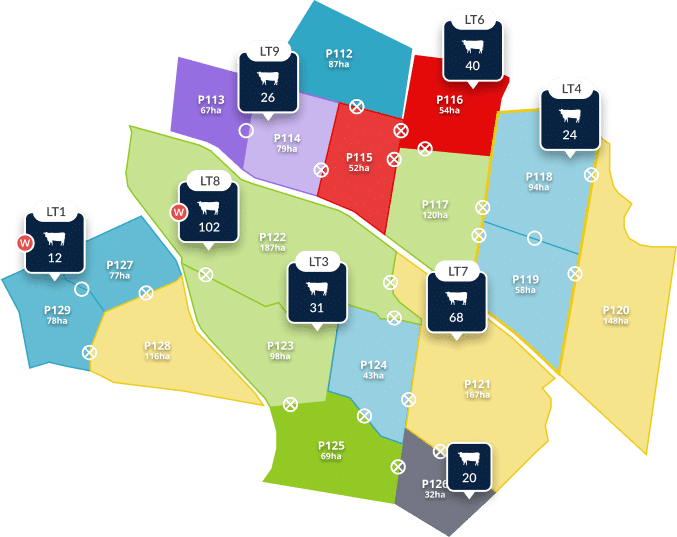
For a breeder in a northern beef system, that might be weaning weights and a cull list: knowing which cows produced and which ones are costing you another season of feed before they earn it back. For a merino operation, it might be knowing the cost of production per head before shearing, not after. For a mixed enterprise managing large numbers across big country, it might simply be accurate stock numbers at any point in time, from the whole farm down to the individual animal, without needing a muster to find out.
The path to value is different for every operation. An implementation plan that doesn’t start with your goals isn’t going to create real change.
The questions worth asking before you start
Before committing to any implementation plan, get clear on a few things:
What do you actually want to know? Not what the software does. What information would change how you run your operation if you had it reliably? Cost per kilogram of gain, treatment histories by mob, performance across joining groups, feed on hand and days to go. Your answer shapes everything about how implementation should be structured.
Who needs to be on board? If the manager does the training but the head stockman is entering the records, they both need to understand the system. Adoption fails when it lives in one person’s head.
What’s on the calendar? The best time to learn how to record a joining event is just before joining. Learning it six months out means you’ll forget it before it matters. Implementation that maps to your production calendar (weaning, preg testing, marking, EOFY) gets used, implementation that runs on someone else’s schedule doesn’t. Are you ready to schedule your session with the team? Get in touch today.
What the first 90 days should look like
Ninety days is a reasonable window to know if an implementation has taken hold. By that point, a farm that’s on track should be entering records consistently, have run at least one report that told them something useful, and have a clear picture of what they’ll use the system for going forward.
That doesn’t happen by accident. It’s the result of sessions built around your specific goals, follow-through between sessions (actually using what was covered before the next one), and a training pace that matches your team. Our customer success team has designed tailored implementation packs with this in mind. See which pack suits you best.
“I don’t know why we haven’t just been doing this the whole time, it’s so easy”, said one producer.
The farms that treat implementation as something done to them tend to still be on the whiteboard at month four. The ones that steer it get something most operations don’t have: certainty over their numbers, every season, without having to chase it.
The honest tradeoffs
Switching from manual record- keeping to livestock management software involves real costs worth acknowledging upfront.
There’s a setup period where data entry feels like extra work before it pays off. There’s a learning curve that’s steeper for some team members than others. And there’s an adjustment to running your operation with reliable numbers rather than gut feel, which is a genuine shift in habit for farms that have always relied on experience alone.
None of that is a reason not to do it, but going in with realistic expectations is what separates farms that push through the early friction from those that don’t.
The best thing about having your records in one connected system isn’t the compliance tick or the cleaner paperwork. It’s what one producer described:
“You really know and trust your numbers. I love that at any time you can just pick up your phone and know exactly what you’ve got on the farm.”
That’s what’s on the other side of the friction. Know what you’re working toward and the early effort makes sense.
The difference is knowing what you want to know
The farms that get the most from livestock management software aren’t necessarily the biggest or the most tech-savvy. They’re the ones that were clear, before they started, about what they wanted their operation to tell them. That clarity shapes everything: which features matter, when to train, who needs to be involved, and how quickly the system earns its place.
If you’re at that crossroads, AgriWebb is built for exactly this. From the whole farm down to every individual animal, across every season you’ve recorded, the picture is always there when you need it. Start with what matters most to your operation, and click here to try AgriWebb free today.
Implementing livestock management software
How long does implementing livestock management software take?

What’s the biggest reason implementations fail?
Do I need to enter all my historical data before I start?
When is the right time to implement?
How do I know if we’re ready?
What about compliance and audits?
How do I book my implementation session with the AgriWebb team?