The new “should be” metric every livestock producer is talking about
(Written by Isobel Davis, Product Marketing Manager)
At LambEx 2026, I had the chance to speak with plenty of producers who are already operating at a high level and are searching for the next 1-2% improvement in their business.
For many of them, AgriWebb has become much more than a way to keep track of stock numbers and locations. They’re using it to manage grazing, fertility, compliance, teams and production, and they’re seeing the benefits.
Ten years ago, when you asked producers whether they were recording animal numbers, tracking chemical use or getting the whole team using technology, the common response was, “We should be.”
This year, I noticed something different.
When I asked whether they were measuring their stocking rate against carrying capacity, the response was often exactly the same.
“We should be.”
That surprised me because these conversations weren’t with producers who were behind the curve. They were some of the best operators in the country. They recognised that one of the biggest opportunities left in their business is understanding how well their stocking rate matches their carrying capacity, balancing production today while protecting their country for future seasons.
Why this metric matters
Stocking rate to carrying capacity compares the feed demand on your farm (your stocking load) with the feed your land can sustainably produce.
It’s a principle championed by our industry partners at RCS, and one I was first introduced to while attending one of their Grazing for Profit schools.
As livestock producers know, grass is money. The challenge is finding the balance between running enough livestock to maximise production while ensuring your pastures remain productive and resilient.
Managing this balance over time is critical for:
- Long-term profitability
- Livestock productivity
- Land condition and resilience
- Confident decision making through changing seasons
Many livestock advisors I’ve spoken with consider stocking rate to carrying capacity one of the most valuable metrics available because it helps identify the management decisions that have the greatest impact on profitability.
Looking backwards to plan ahead
Tracking your stocking rate against carrying capacity over time shows when you’ve been overstocked or understocked relative to the seasons you’ve experienced.
Looking back at these trends helps explain why certain years performed well while others didn’t, giving you greater confidence when similar seasonal conditions occur again.
The problem has always been that calculating this metric has required spreadsheets, manual calculations and pulling together information from multiple places. For most producers, it simply wasn’t practical to update regularly.
Turning data into decisions
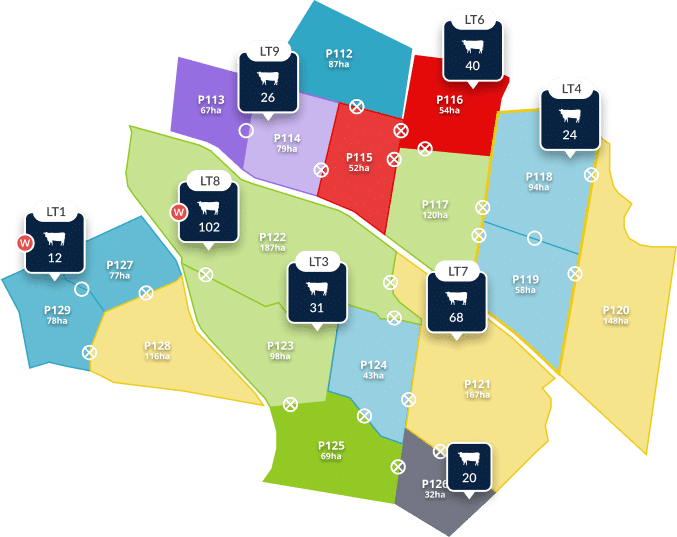
The foundation of AgriWebb has always been helping producers know where their livestock are, how many they have and how much feed they’re consuming.
That means much of the information needed to calculate stocking rate to carrying capacity is already being captured, from livestock numbers and movements to available feed and rainfall.
Now, AgriWebb automatically brings that information together to calculate your historical stocking rate to carrying capacity trend over the past five years, allowing you to benchmark performance and understand where you’ve historically achieved the right balance.
More importantly, you can now forecast up to 12 months ahead.
Scenario planning allows you to test different management decisions before making them. Whether it’s weaning earlier, selling stock, purchasing additional livestock or agisting, you can see how those decisions impact your stocking rate relative to carrying capacity before taking action.
The result is moving this metric from something producers know they should monitor to something they can use every day to make more confident stocking decisions.
As AgriWebb customer Kate Usmar put it, what once took a full day in the office and countless spreadsheets can now be reviewed in minutes, giving her confidence to make significant stocking decisions based on current information.
I’m looking forward to the next LambEx in two years’ time and hearing producers talk less about why they should be measuring stocking rate to carrying capacity, and more about the decisions they’re making because they are.
Ready to see it in action?
Discover how the Stocking Rate to Carrying Capacity tool can help you review historical performance, benchmark your operation and confidently plan future stocking decisions. Start your grazing planner trial today.